Summary
INSTAWALL™ from KPS Global is a metal-faced panel system that replaces stick-built construction inside stores, warehouses and facilities. Instead of framing with 2×4 studs and then adding insulation, drywall and finish work on site, INSTAWALL arrives as finished panels built to project specifications and locks together with cam-lock tongue and groove joints. Projects need fewer trades, finish faster and create less job site waste.
Rethinking Traditional Construction
When a project calls for walls inside a store, warehouse or facility, the default has long been stick-built construction. Crews frame the wall with 2×4 studs, then insulation goes in, then drywall goes up, then it gets taped, mudded and finished. Electricians rough in conduit and boxes once the framing is up, wait on a rough-in inspection before anyone can close the wall, then come back for trim-out and a final inspection. Each step brings its own trade, holding its own spot on the schedule and its own share of job site waste.
That process works, but it was never designed for speed. Every handoff between trades is a chance for delays, and every delay pushes back opening day.
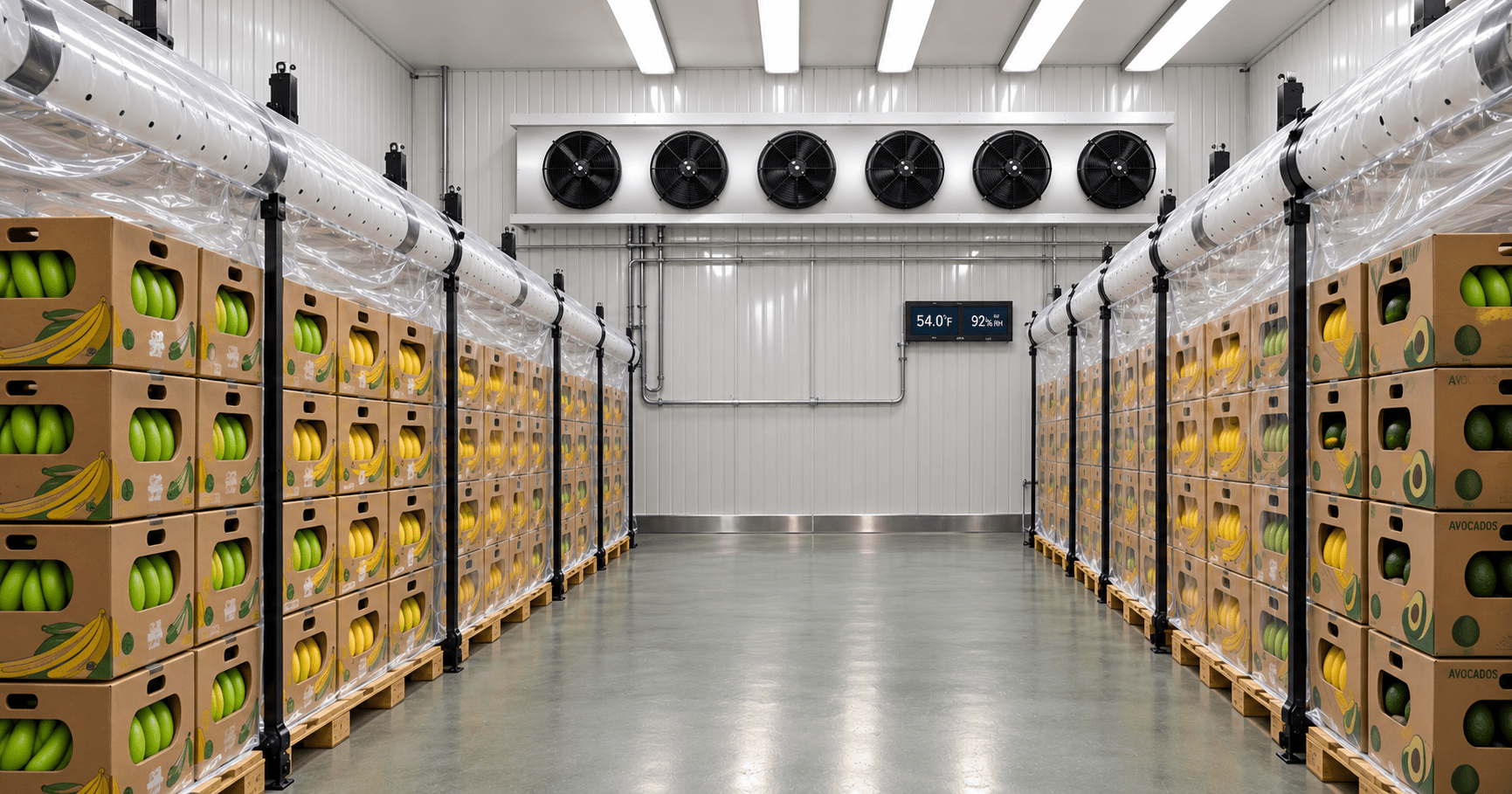
KPS Global INSTAWALL™ panels offer a different approach. Built with the same panel technology used for walk-in coolers and freezers, INSTAWALL replaces the stick-built process with panels made to your project specifications. The result is fewer trades on site, shorter construction timelines and less waste.
How INSTAWALL is Different
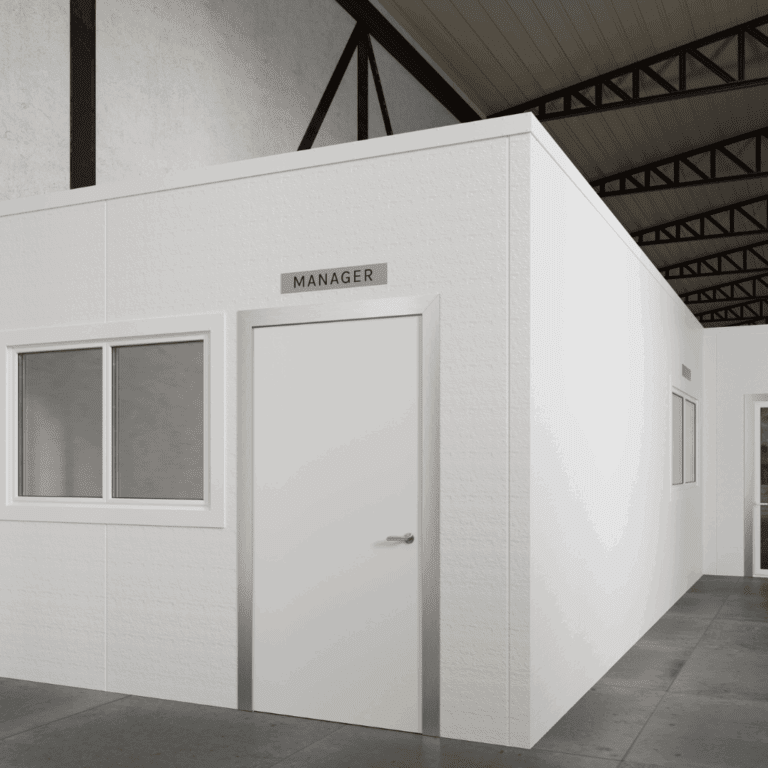
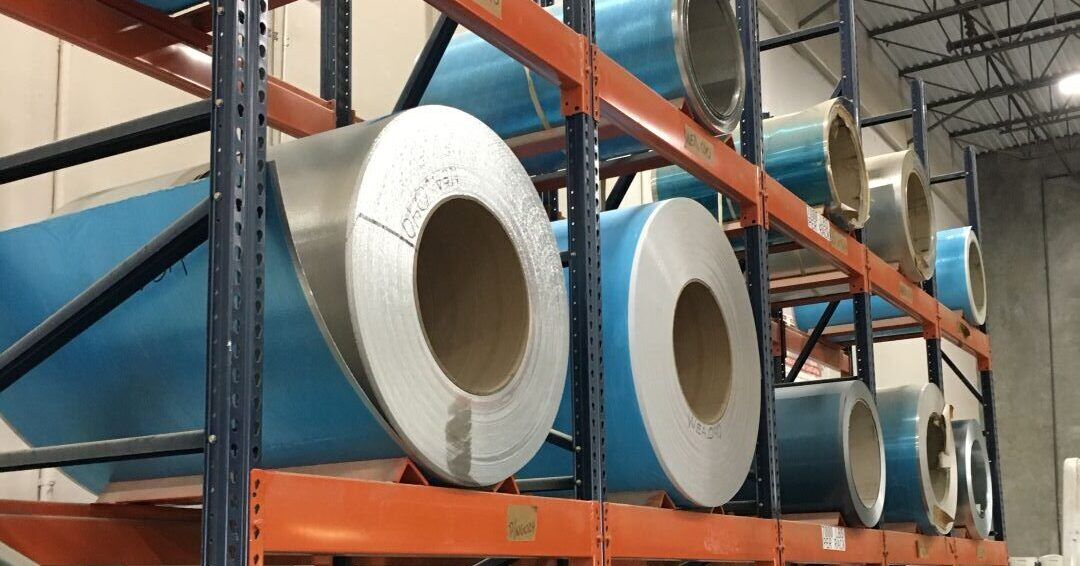
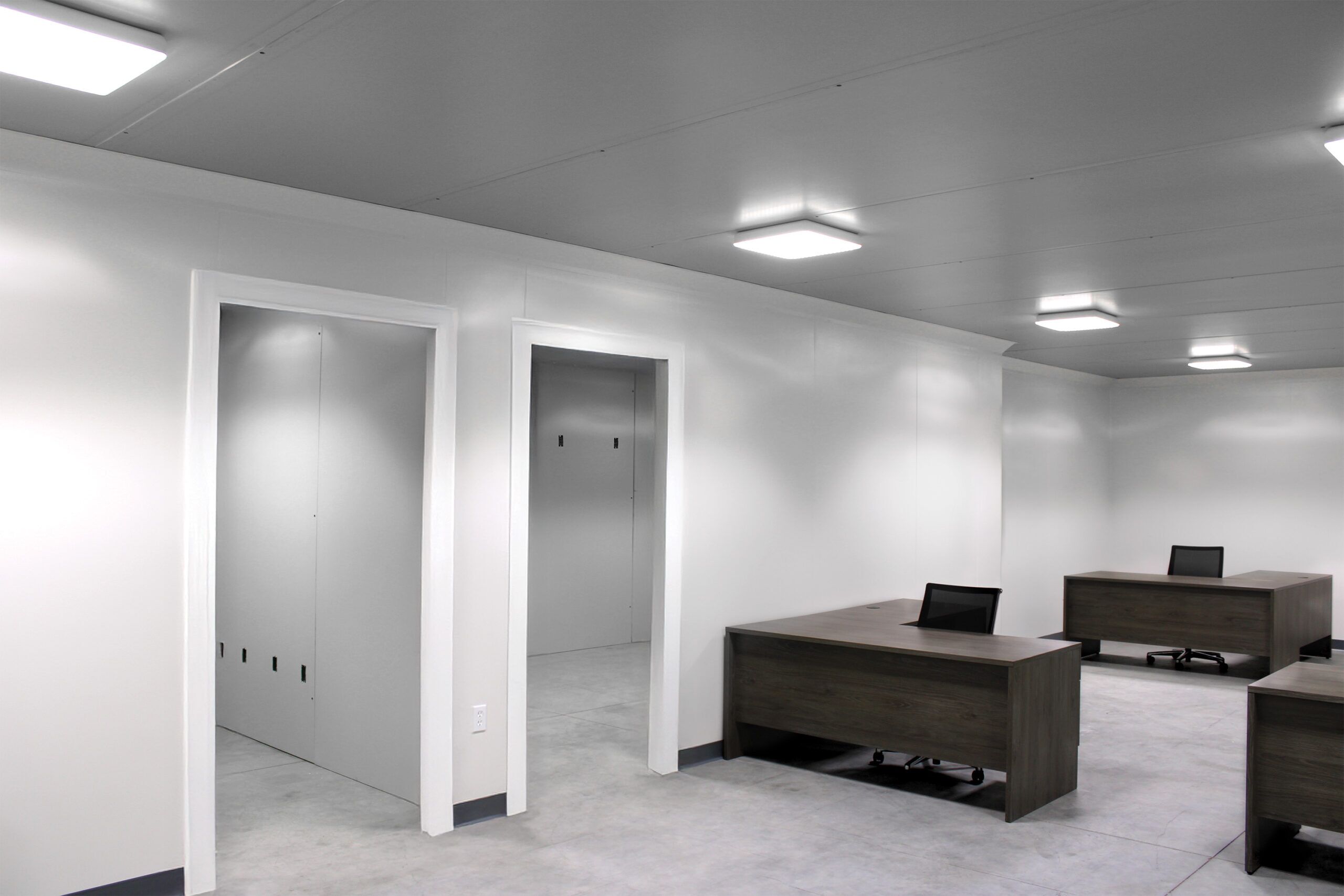
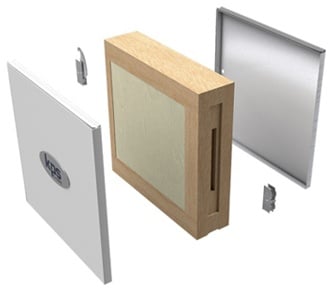
Instead of assembling a wall layer by layer on site, the panel arrives complete. Each panel is a factory-finished metal skin on both faces with a foam core between them, built to fit the project specs. There is no gypsum in the panel and nothing to frame, tape, mud or paint once it is on site. We build them at multiple strategically located plants, and they can be customized by size, finish and texture so the space looks clean and uniform from day one.
Panels are built to what each area actually needs. Some are fully foamed, some are partially foamed with an open chase for other trades and some are removable with no insulation. Your project specs determine which design goes where.
How INSTAWALL Goes Together
INSTAWALL panels join with cam-lock tongue and groove construction. The tongue of one panel seats into the groove of the next, and an installer engages the cam-lock through an access port to pull the two panels tight into a flush, locked joint. No studs to frame, no fasteners through the finished face and no finish work between panels.
That connection is the reason INSTAWALL goes up as fast as it does. A crew sets panels in sequence and locks them as they go, so the wall is structurally complete and finished in the same pass. The same cam-locks also mean panels can be unlocked and relocated later if the space changes.
INSTAWALL Vs. Stick-built Construction
Here is how the two methods compare on the factors that matter most once a project is underway.
| Stick-Built Construction | INSTAWALL | |
|---|---|---|
| Trades on site | Framers, electricians, insulation, drywall crews and finish-out crews, each scheduled separately | Fewer trades, with panels arriving ready to install |
| Construction timeline | Sequential steps where each trade waits on the last | Faster installation that shortens the overall schedule |
| Job site waste | Offcuts, packaging and drywall scraps to clean up | Reduced construction waste |
| Cleanliness | Dust and debris from cutting, sanding and finishing | A cleaner install with a smooth, easy-to-clean surface |
| Surface | Drywall taped, mudded and painted on site | Factory-finished metal skins, no site finishing |
| Energy | Dependent on insulation used | Insulated panel designs can help reduce the BTU load on HVAC |
| Future changes | Walls are demolished and rebuilt | Panels support redesign and expansion |
Taken together, these advantages make INSTAWALL a comparable overall investment with a faster install time.
Built for the Trades that Follow
Electrical and data lines all need a path, and with stick-built walls that often means cutting into finished work. INSTAWALL panels are designed with those lines in mind.
Vertical chases: Chase wall panels are built with a cavity on the left or right side, which gives electricians a clear access point for conduit and boxes.
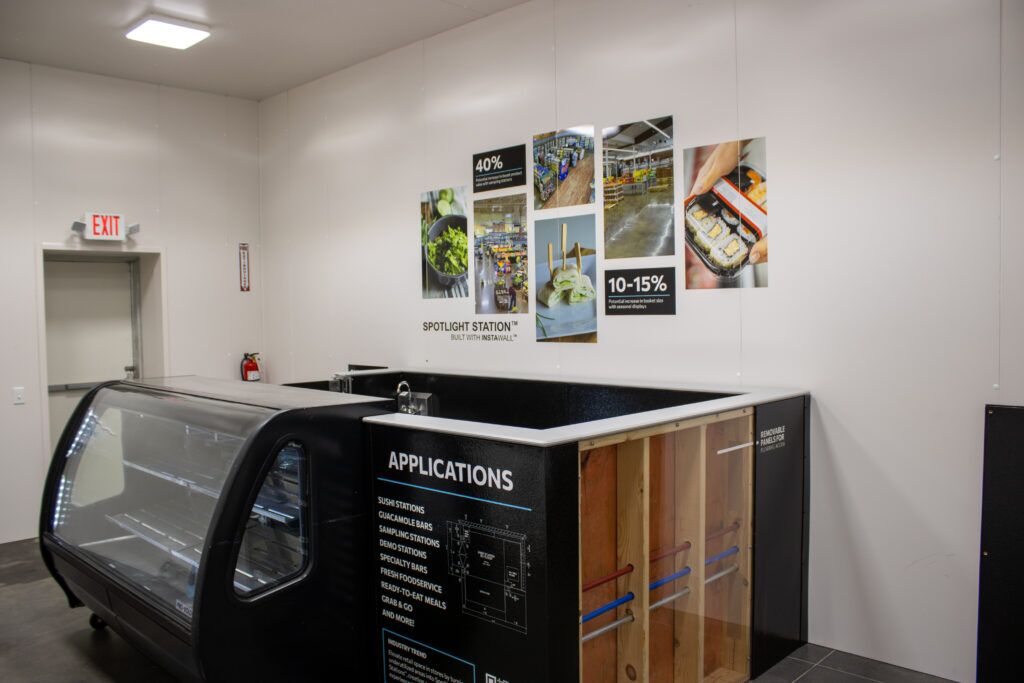
Removable panels: For plumbing, we offer a removable panel. Plumbers can set their lines, leave the cavity open for inspection, then reinstall the panel and finish out without cutting into a finished wall. This reduces the work needed after the walls go up and helps keep the project on schedule.
Vertical Chase
Removable Panel
These features are a big part of how INSTAWALL addresses the speed of stick-built construction, creating a more flexible process that helps get stores open faster.
Where INSTAWALL is Used
INSTAWALL fits a wide range of spaces inside a building. Common applications in retail stores include:
- Prep rooms
- Parapet and soffit walls
- Offices
- Pharmacy areas
- Optical and hearing centers
- Bathrooms
- Dry storage rooms
- Retail spaces
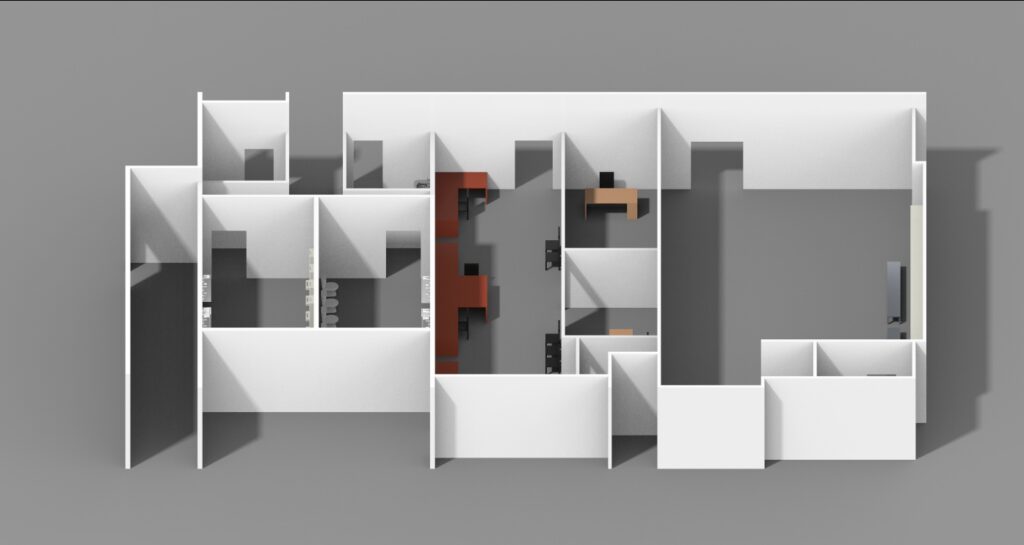
Chase walls in prep rooms. In deli, meat and bakery prep areas, INSTAWALL chase walls cover plumbing while giving these rooms a smooth, easy to clean surface with no drywall to finish or maintain. In wet applications such as bathrooms, INSTAWALL serves as the base wall and still works alongside the waterproofing, tile and sealant work the application calls for.
Parapet and header walls. Using INSTAWALL to extend the height of walk-in coolers and freezers hides machinery from view, creates a safety barrier against fall risks and gives retailers a clean, flat surface for branding or advertising.
INSTAWALL can also be used for indoor construction where speed and flexibility are key.
INSTAWALL in Action: SPOTLIGHT STATION®
One example of what INSTAWALL makes possible is our Spotlight Stations. Built with INSTAWALL modular panels, these stations turn unused retail space into a foodservice destination for guacamole, sushi, sampling stations or other specialty concepts. Spotlight Stations install overnight, so stores can open new revenue opportunities with minimal disruption.
One Partner from Start to Finish
INSTAWALL is part of the end-to-end solutions. Our team handles every phase, from design to install. Our factory trained installers specialize in building our products, so your project goes up efficiently and saves you both time and money.
If your next project calls for walls inside a store, warehouse or facility, there is a better way to build than traditional construction. Talk to our team about how INSTAWALL fits your project specifications and schedule. Contact Us
FAQs
Frequently Asked Questions
What is stick-built construction?
Install time depends on the size and scope of the project, but because panels arrive built to spec and lock together with cam-lock tongue and groove joints, there is no waiting on framing, insulation and drywall crews to finish in sequence.
Is INSTAWALL more expensive than stick-built construction?
Comparing material prices alone does not tell the full story. INSTAWALL reduces the number of trades on site, shortens the construction timeline, cuts job site waste and holds up better over time, all of which affect the total cost of a project. When you look at the full life of the space, INSTAWALL is a less expensive overall investment.
How long does it take to install INSTAWALL?
Install time depends on the size and scope of the project, but because panels arrive built to spec, there is no waiting on framing, insulation and drywall crews to finish in sequence. See How INSTAWALL is installed.
Can you hang shelves, TVs or equipment on INSTAWALL?
Yes. INSTAWALL panels with plywood backing give you a solid surface for mounting shelving, TVs and equipment. Items can also be screwed directly into the wood studs built into each panel.
What information do I need to get a quote?
Dimensions of the space, how it will be used, preferred finish and where electrical and plumbing lines need to run. Our team can work from drawings or a site visit to build a solution around your project.
What are INSTAWALL panels made of?
INSTAWALL panels are built with factory-finished metal skins over a foam core. They do not use gypsum or drywall. Depending on what the area calls for, a panel may be fully foamed, partially foamed with an open chase or removable with no insulation.